



Acne
Acne is a common skin disorder that usually appears during adolescence and is characterized by blackheads, pimples, and inflammatory lesions. In some cases, acne can leave permanent scars and have a significant psychological impact. For this reason, early diagnosis and appropriate treatment are important.

What is Acne?
Acne vulgaris, c commonly referred to as acne, is one of the most common skin disorders. It affects the pilosebaceous units, which are formed by hair follicles (openings from which hair grows ) and sebaceous glands, responsible for producing sebum to lubricate the skin and hair.
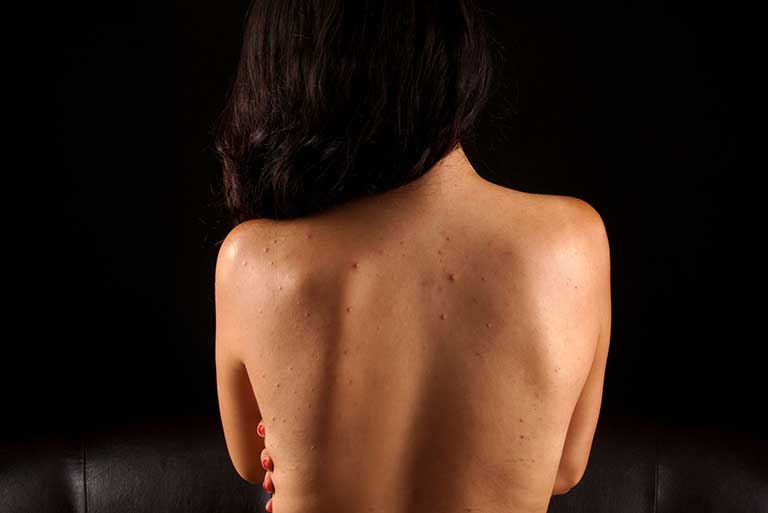
Acne is a chronic condition characterized by the development of papules, pustules, comedones and nodules. It can present with both inflammatory and non-inflammatory lesions- Although acne most frequently affects the face,it may also appear on the upper arms, chest, trunk and back. The clinical presentation of acne varies widely., ranging from non-inflamed open and closed comedones ("blackheads" and "whiteheads") to more severe forms, such as papules, pustules and inflammatory nodules.
Who Is Affected by Acne?
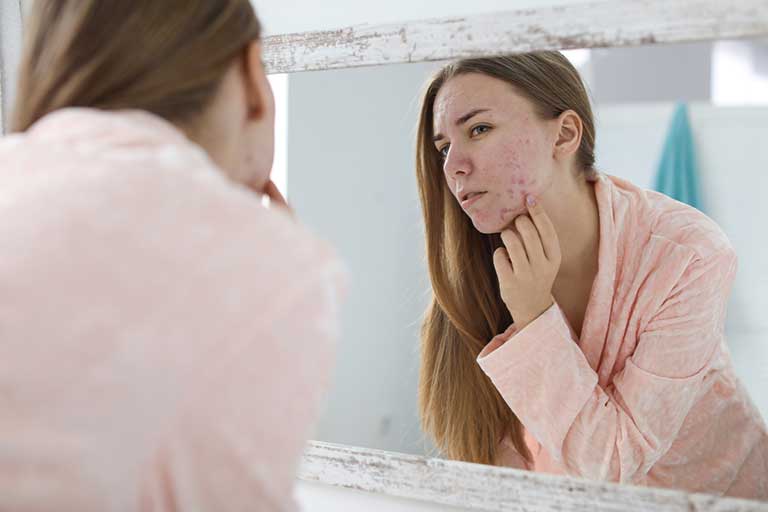
Acne is most common among adolescents and young adults, specially males, but it is not limited to these ages. It is estimated that about 35%-90% of adolescents experience acne to some degree. Onset typically occurs between the ages of 7 and12, and in many cases, acne improves or resolves by early adulthood.
.However, acne may persist beyond adolescence or reapper later in life. Adult acne is more frequently observed in women and require specific management approaches.
Phychosocial Impact
Although acne is not a disease that causes a physical disability, its psychological impact can be significant. People living with acne may experience reduce self-esteem, depression or anxiety, particularly in cases of moderate to severe disease or when scarring occurs.

What causes Acne?
The origin and development of acne involves different factors, whose interaction leads to the formation of comedones and inflammatory lesions.During adolescence, acne is primarily triggered by the increased sensitivity of sebaceous glands to hormones, particularly androgens. These hormones stimulate the sebaceous glands to produce excess sebum. Al the sme time, there is an increased proliferation of , and to an excessive increase of Cutibacterium acnes, a bacterium usually found in hair follicles which can contribute to inflammation. Other factors may also influence the development and severity of acne, including genetic predisposition and, in some individuals, dietary factors, although the role of diet remains an area of ongoing research.
Symptoms and Signs
Acne vulgaris occurs in those areas of the body with large sebaceous glands that respond to hormones,such as the face, neck, chest, upper back and upper arms, with different types of active lesions being present in the same area at the same time.
The severity and extent of acne can vary, ranging from the occasional appereance of a few small comedones to the chronic presence of numerous inflamed nodules that affect most of the skin in the involved areas.
After the acne disappears, the most common sequelae are post-inflammatory hyperpigmentation and scarring.
Diagnosis
Acne vulgaris is usually diagnosed through a physical examination. There is no specific diagnostic test for acne. In rare cases, a doctor may take a swab or scraping of a lesion or pustule for microbiological examination or culture to rule out other sources of infection.
In women, hormone blood tests may be resquested to assess, for example high testosterone levels, which may indicate conditions such as polycystic ovary syndrome (PCOS)).
Treatment
There is no single effective treatment for acne; therefore, a combination of treatments is recommended. As acne lesions take at least eight weeks to mature, the treatment should be maintained for a minimum of two to three months before deciding if it is effective.
Topical Products
Topical Topical treatments drugs play a central role in acne management and are are of major importance and widely prescribed in acne therapy. The most effective topical treatments agents in acne are include retinoids, benzoyl peroxide, antibioticsantibiotics, and azelaic acid. These treatmentsy are indicated indicated for in mild to moderate acne, and alsoand may also be used in moderate to severe acne in in combination association with systemic (oral) treatments.
Oral Therapy
Oral antibiotics: Oral antibiotics act by reducing Cutibacterium acnes. acnes and by directly decreasing inflammation. They are used in for moderate to and severe acne, and alsoand in cases where acne affects larger areas, such as extending over the chest and/ or back. Tetracyclines ( such as like doxycycline, lymecycline minocycline and sarecycline) are the first choice, preferred over before macrolides ( such as like erythromycin and azithromycin) due to fewer side effects, including in particular antibioticantibiotic resistance.
Oral hormones: The most effective hormonal treatments for acne are combined oral contraceptives. Among the available combined oral contraceptives, the ones containing progestins with an antiandrogenic effect ( such as cyproterone acetate, drospirenone and chlormadinone acetate) are preferred among patients with acne.
Oral retinoids: Oral isotretinoin is a naturally occurring moleculecompound, and part of the metabolic chain that ends up in vitamin A products. It is indicated in for severe acne or for acne that doesn’t respond adequately to an appropriate course of therapy with systemic antibiotics and topical topical therapies. treatments.
Other Acne Therapies
A recently published study shows that red light, blue light, yellow light, infrared light, and pulsed dye laser can’t be considered as a first-line therapy in acne. These procedures can be used in association with standard therapies in selected cases.
Cosmetic products provide an unavoidable support to standard treatments. Their correct use may counteract the irritation induced by some standard therapies and help maintain the skin in a physiologically balanced situation.
Care of Skin with Acne:
Skin care is essential for the treatment of acne. To optimise treatment outcomes, the following habits are recommended.
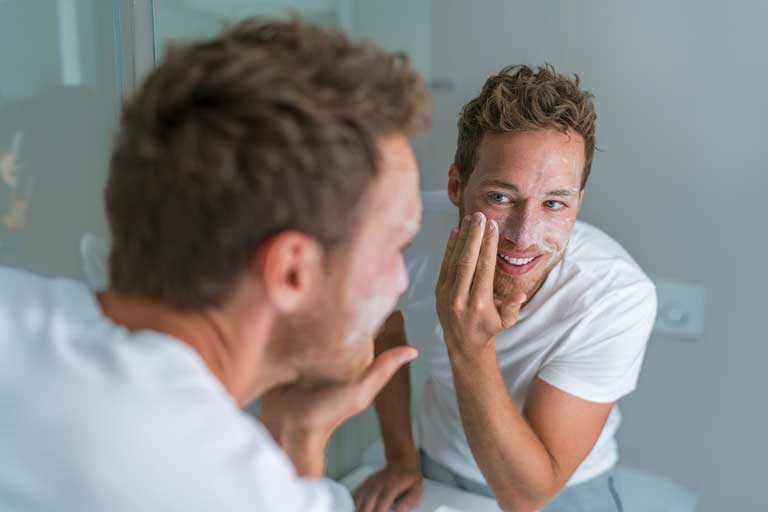
- Skin Hygiene: The face should not be washed more than twice a day with warm water (not hot) and a mild, soap-free facial cleanser. It is not recommended to useabrasive tools, such as sponges or textured wipes.or vigorous rubbing should be avoided, as it may worsen acne and damage the skin. Pimples should not be squeezed because it may exacerbate inflammation,cause swelling, increase the risk of infectiom, and lead to permanent scarring.
- Moisturizing Creams: The use of a moisturizing cream helps reduce skin dryness and, consequently, desquamation. You must use creams with labels indicating that they are non-comedogenic to reduce the probability of skin pores plugging.
- Sun Protection: Some acne treatments, such as retinoids or doxycycline, increase skin sensitivity to sunlight. Appropriate sun-protection measures should be therefore adopted.
References
- Sutaria Amita H, Masood Sadia SJ. Acne vulgaris. StatPearls - NCBI Bookshelf. CRC Press; 2019. Available at: https://europepmc.org/article/med/29083670
- Thiboutot D, Zaenglein A. Pathogenesis, clinical manifestations, and diagnosis of acne vulgaris. UpToDate. 2015;1–51. Available at: https://www.uptodate.com/contents/pathogenesis-clinical-manifestations-and-diagnosisof-acne-vulgaris
- Yazici K, Baz K, Yazici AE, Köktürk A, Tot S, Demirseren D, et al. Disease-specific quality of life is associated with anxiety and depression in patients with acne. J Eur Acad Dermatology Venereol. 2004 Jul;18(4):435–9. Available at: https://www.ncbi.nlm.nih.gov/pubmed/15196157
- Klassen AF, Newton JN, Mallon E. Measuring quality of life in people referred for specialist care of acne: Comparing generic and disease-specific measures. J Am Acad Dermatol. 2000 Aug;43(2 I):229–33. Available at: https://www.ncbi.nlm.nih.gov/pubmed/10906643
- Dalgard F, Gieler U, Holm JØ, Bjertness E, Hauser S. Self-esteem and body satisfaction among late adolescents with acne: Results from a population survey. J Am Acad Dermatol. 2008 Nov;59(5):746–51. Available at: https://www.ncbi.nlm.nih.gov/pubmed/19119094
- Webster GF, Leyden JJ, Nilsson UR. Complement activation in acne vulgaris: Consumption of complement by comedones. Infect Immun. 1979;26(1):183–6. Available at: https://www.ncbi.nlm.nih.gov/pmc/articles/PMC414592/
- Stathakis V, Kilkenny M, Marks R. Descriptive epidemiology of acne vulgaris in the community. Vol. 38, Australasian Journal of Dermatology. Blackwell Publishing; 1997. p. 115–23. Available at: https://onlinelibrary.wiley.com/doi/abs/10.1111/j.1440-0960.1997.tb01126.x
- Collier CN, Harper JC, Cafardi JA, Cantrell WC, Wang W, Foster KW, et al. The prevalence of acne in adults 20 years and older. J Am Acad Dermatol. 2008 Jan;58(1):56–9. Available at: https://www.ncbi.nlm.nih.gov/pubmed/17945383